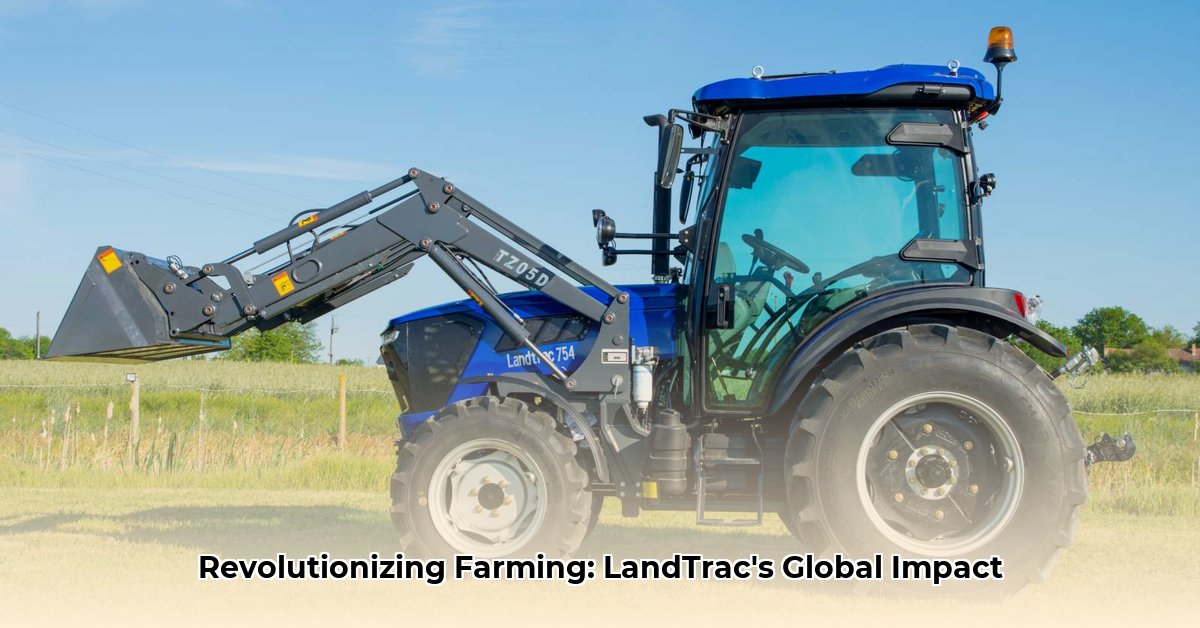
LandTrac Tractors: A Rising Force in Global Agriculture
LandTrac tractors are making a quiet yet significant impact on farms worldwide. While precise sales figures are unavailable, their presence in numerous countries suggests a substantial global reach. This article explores LandTrac's market position, strategies, and the challenges faced in a competitive and ever-evolving agricultural machinery sector. How have they achieved this success? What challenges lie ahead? For more details on tractor costs, see this helpful resource: farm tractor costs.
Key Insights:
- LandTrac’s success hinges on a combination of affordability, a focus on robust after-sales support, and a targeted approach to specific market segments.
- The company likely targets smaller farms and farmers in developing regions where cost-effectiveness is paramount.
- Data limitations hinder a precise assessment of LandTrac's market share and profitability, requiring further research.
LandTrac's Business Model: A Focus on Simplicity and Support
LandTrac's apparent success stems from a strategic focus on customer support and affordability. Their online presence emphasizes spare parts and service, suggesting a business model built on trust and long-term relationships. This contrasts with manufacturers prioritizing cutting-edge technology at a premium price point. Is this a sustainable strategy in a rapidly innovating market? Only time and comprehensive market data will tell.
“LandTrac’s strategy reminds me of successful niche players in other industries,” says Dr. Anya Sharma, Agricultural Economics Professor at the University of California, Davis. "By focusing on a specific customer segment and delivering exceptional service, they've likely cultivated strong brand loyalty.”
Market Positioning and Competitive Landscape
Determining LandTrac's precise market share is difficult due to the limited availability of data. However, evidence suggests a global presence and emphasis on cost-effective, reliable tractors for smaller farming operations. This niche approach allows them to compete effectively without directly challenging established players in the high-end market segment. What are their competitive advantages, and how sustainable is this strategy in the face of technological advancements?
This targeted approach suggests a shrewd understanding of market segmentation. Has LandTrac successfully identified an underserved niche? This question necessitates further market research to validate their positioning effectively.
Key Stakeholders and Their Strategies
Several key stakeholders influence LandTrac's success:
| Stakeholder | Short-Term Goals | Long-Term Vision |
|---|---|---|
| LandTrac Management | Improve data collection, enhance marketing | Expand product lines, international expansion, R&D investment |
| Potential Investors | Conduct thorough due diligence, market evaluation | Assess long-term viability and scalability |
| Small-Scale Farmers | Affordability, reliability, readily available support | Long-term cost analysis, technology suitability, ease of maintenance |
| Competitors | Monitor LandTrac's actions and market impact | Innovation, adaptation to maintain competitiveness |
Risks and Mitigation Strategies
LandTrac faces several critical risks:
| Risk Category | Likelihood | Impact | Mitigation Strategy |
|---|---|---|---|
| Data Deficiency | High | High | Comprehensive market research, robust data collection systems |
| Intense Competition | Medium | Medium | Competitive analysis, development of unique selling propositions |
| Technological Obsolescence | Medium | High | Ongoing R&D, continuous improvement and technology adaptation |
| Economic Downturn | Medium | High | Robust financial models, cost-cutting strategies |
| Supply Chain Disruptions | Medium | Medium | Diversify sourcing, strong supplier relationships |
Data limitations represent a major challenge. More comprehensive market research is critical for a truly in-depth analysis. How will LandTrac proactively address these risks to ensure long-term growth?
Sourcing LandTrac Tractor Parts Globally
Securing reliable LandTrac tractor parts globally requires a strategic approach. Online marketplaces offer convenience but pose risks regarding authenticity. Verifying suppliers, contacting LandTrac directly for authorized dealers, or utilizing established distributor networks are crucial steps. Proactive maintenance and strong supplier relationships contribute to minimizing downtime and maximizing operational efficiency. What is the most effective strategy for minimizing the total cost of ownership (TCO)?
Does the global reach of LandTrac create logistical complexities in parts distribution? This warrants further investigation into their supply chain management practices.
Conclusion: A Promising Future?
LandTrac's success reflects a strategic focus on a specific market segment and a commitment to customer service. However, data limitations hinder a comprehensive assessment of their market position and future potential. Further market research is needed to fully understand LandTrac's impact and its long-term prospects within the competitive global agricultural machinery market. Are they positioned for sustained growth, or will they face significant challenges ahead? Only time will tell.